
General Dentistry

Your Smile Essentials
At Abilene Family Dentistry, we love learning new things and passing on knowledge. However, some of the best practices for a healthy mouth happen to be tried-and-true instead of new. What’s relatively newer is the understanding of the oral-systemic link and how integral your oral health is for overall wellness, as well as the technology that helps us identify problems before they cause damage that requires more invasive treatment. We’re happy to see you regularly, and even happier when we can give you good news, so don’t skip your check-ups and cleanings!
Share a Smile With Us
Schedule a check-up with us today!
Oral Hygiene
Although a fresh looking and smelling smile are important benefits of a solid oral hygiene routine, there’s an even more compelling reason to be diligent in your habits! When you floss and brush properly, you’re making your mouth less hospitable for bad bacteria that may be associated with certain health conditions, based on ongoing research.
To decrease the amount of food debris and plaque (which hardens to tartar, and tartar requires a professional cleaning for removal) in your mouth, we recommend you to take the following steps each day!
- Use a soft-bristled toothbrush and be sure to replace it at least every 3 months.
- Brush in small, circular movements for two minutes at least twice a day. Don’t skip your tongue.
- Wait at least 30 minutes after brushing before eating or drinking. This prevents enamel-eroding acid attacks.
- Floss once a day. Curve floss around each tooth in a c-shape and slide it slowly back and forth, not up and down. Use a new section of floss between each tooth to avoid redepositing plaque and bacteria.
- Optional: rinse with an alcohol-free mouthwash. Alcohol is drying, and you don’t want to inhibit your production of saliva.
- When toothbrush & floss aren’t available, swish and spit with water. This helps reduce plaque and acid buildup throughout the day.
Gum Disease
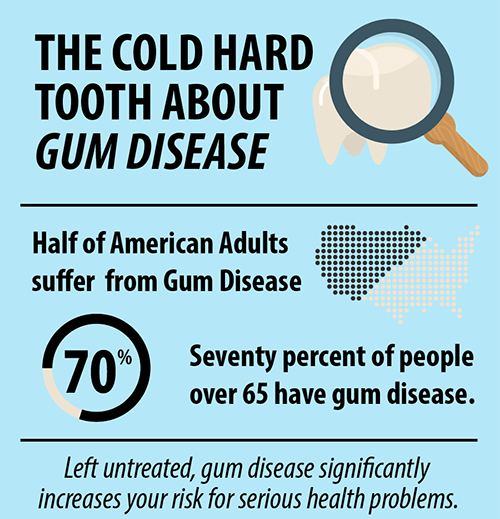
Gum disease, also known as gingivitis (the reversible stage) and periodontitis (the advanced stage), is the leading cause of adult tooth loss. It’s a very common infection and can affect your smile. As if that’s not bad enough, may be associated with inflammation in other areas of the body and has been linked in research to conditions such as heart disease, stroke, diabetes, rheumatoid arthritis, pregnancy complications, and some cancers. Ongoing research is discovering more of these oral-systemic links all the time.
The good news is that gum disease may be preventable with proper care. Your thorough oral hygiene routine and regular preventive examinations play an important role in maintaining oral health. If you do have gum disease, we can help with non-surgical treatment to support your oral health and manage the condition.
Oral Cancer Screenings
Our thorough examinations include screening for oral cancer. Your risk may be low, but we monitor for any abnormalities. Statistics vary, and early detection remains important.
Perhaps the main reason it’s such a deadly form of cancer is because it’s caught in later stages, so we want to help educate patients about what increases your risk and what to be on the lookout for. If you notice any of the signs and symptoms listed on our graphic, we recommend considering scheduling a screening. Keep in mind that 25% of patients diagnosed with oral cancer don’t have any of the risk factors, so regular examinations with our intraoral cameras can help monitor your oral health.
Mouthguards
If you or your child play contact sports (whether you’re coming into contact with other people or equipment), we recommend wearing a mouthguard to protect your smile. Besides protecting your teeth from being cracked or knocked loose, they can keep your teeth from causing soft tissue injury. You can find stock boil and bite mouthguards at sporting goods stores or even some drugstores, but these varieties are often less comfortable and durable. We’re happy to provide custom mouthguards designed to fit your mouth and support protection during activity.
If you’re a chronic jaw clencher (jaw clenching is also referred to as bruxism) or teeth grinder, which may happen more while you’re asleep, you could benefit from wearing a nightguard. These habits can cause excessive wear to the teeth, creating the need for bonding or in more extreme cases, crowns. Besides the damage done to your teeth, the pressure on your temporomandibular joint, or TMJ, can cause a lot of inflammation and pain. You can help protect yourself from TMJ-related headaches and migraines, ear-ringing, and facial muscle soreness with a nightguard designed for your bite, as recommended by your dentist.
Support Your Oral Health
If you have any questions about general dentistry or you’re ready to schedule a consultation with your Abilene dentists, Dr. Webb and Dr. Awtrey, give us a call today or request an appointment online. We’re here to support your preventive care and oral health.
Disclaimer: The content of this page is not intended to be a substitute for professional dental advice, diagnosis, or treatment. Always seek the advice of a qualified dental professional with any questions you may have regarding your oral health. Individual results may vary.